
When a washing machine is not spinning correctly, the problem is rarely a mystery once you work through it in the right order. The drum may turn slowly, stop before the end of the cycle, make an alarming noise, or leave clothes so wet that they drip when you lift them out. Each symptom points to a different likely cause, and many of the simplest causes can be checked without tools or technical knowledge.
This guide explains what a washing machine not spinning correctly usually means, the safe checks to try first, and the warning signs that mean it is time to stop and call a repairer. Work from the top down: start with the load and the settings, then check drainage and the door lock, and only then consider mechanical faults such as a worn belt or a failing motor.
What ‘not spinning correctly’ looks like
Not every spin fault looks the same, and the exact behaviour is a useful clue. A machine that spins slowly may be protecting itself from an unbalanced load, while a machine that does not spin at all may be unable to drain, unable to lock its door, or set to a cycle with no spin. A machine that starts to spin and then stops may be sensing too much movement, too many suds, or a problem with the motor or drive system.
- Slow spinning: the drum turns, but clothes come out much wetter than usual.
- Noisy spinning: banging, thumping, grinding, or loud rattling during the spin.
- Stopping early: the cycle ends, pauses, or returns to an earlier stage instead of finishing the spin.
- Clothes still soaking: water remains in the drum or the laundry feels heavy and saturated.
Note whether the fault happens on every load or only with certain items. A fault that appears only with towels, bedding, or a single heavy jumper is much more likely to be a load problem than a broken part.
Safety first
Before you open a filter, move the machine, or touch anything underneath it, switch the machine off and unplug it from the wall. Water and electricity are a dangerous combination, and a drum that is still turning can cause injury. Do not reach into a spinning drum, even if it looks as though it is slowing down. Wait until it has stopped completely.
Keep towels and a shallow tray nearby when you check the pump filter or drain hose, because some water will almost certainly escape. If water is leaking, if you smell burning, or if the circuit breaker trips, stop, unplug the machine if it is safe to do so, and do not run it again until it has been inspected. The same advice applies if the door is locked with water still inside: do not force it open.
Check the load first
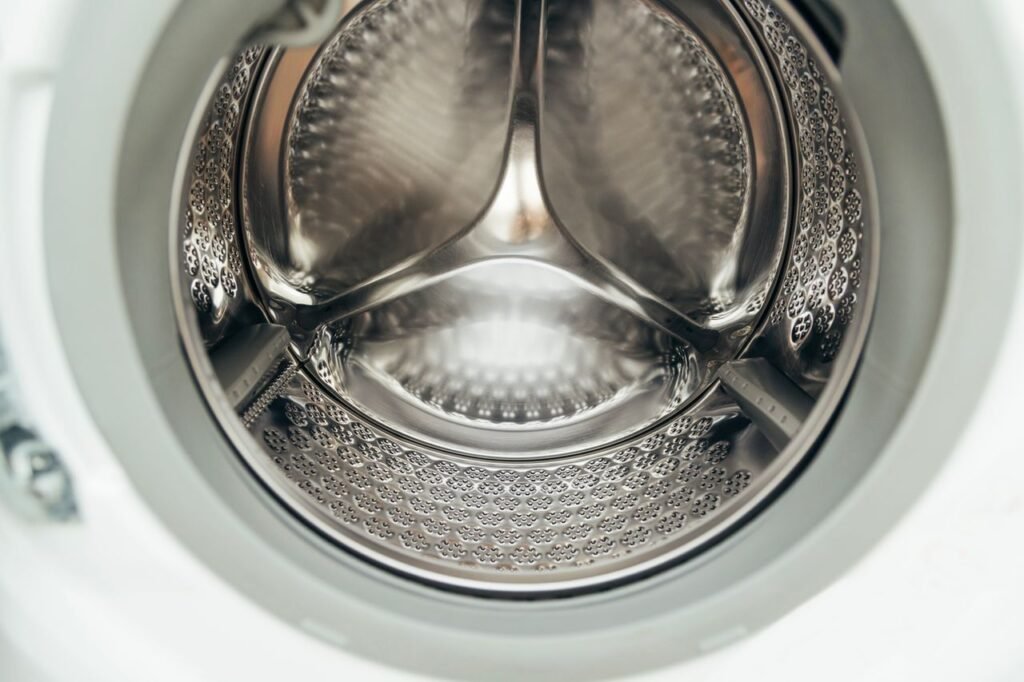
An unbalanced or overloaded drum is the most common reason for a poor spin, and it is also the easiest to fix. During the spin, the drum turns very fast, so even a small imbalance can make the machine shake, slow down, or abandon the spin to protect its bearings and suspension. A single heavy item, such as a bath mat, a duvet cover, or a pair of jeans, can cling to one side of the drum and throw the whole load out of balance.
Open the door once the drum has stopped, redistribute the laundry evenly around the drum, and remove a few items if the drum is packed tightly. Large items should generally be washed separately or with other items of a similar size and weight, rather than alone. Then close the door and run a drain-and-spin cycle. If the machine spins normally after that, the load was almost certainly the cause.
Overloading causes a different problem: clothes cannot move freely, water cannot be extracted evenly, and the motor has to work harder than it was designed to. As a rule, leave enough room for your hand to fit loosely above the laundry in the drum. If you have to push clothes down to close the door, the load is too large.
Check the cycle and settings
Many spin problems turn out to be settings rather than faults. Delicate, wool, hand-wash, and rinse-and-hold cycles often use a low spin speed or no spin at all, to protect fragile fabrics. A no-spin or low-spin option may also have been selected by accident. Check the selected programme, the spin-speed setting, and whether a rinse-hold or soak option is active.
Child lock can also cause confusion. On some machines, it prevents changes to the programme or stops the cycle from advancing in the expected way. If the display shows a lock symbol or the controls do not respond, check the manual for how to switch the child lock off. If the machine has stopped partway through, a simple drain-and-spin programme is often the quickest way to test whether it can spin at all. If the machine will not start in the first place, that is a different fault: see Why Won’t My Washer Turn On? for the checks that apply before the cycle begins.
Drain first: why a washer will not spin if it cannot drain
A washing machine normally drains before it spins, and for good reason. Spinning a drum full of water would be noisy, inefficient, and hard on the machine. If the water cannot get away, many machines will either spin very slowly or refuse to spin at all. That is why a spin fault and a drainage fault often appear together.
Check the drain hose for kinks, sharp bends, or a blockage where it joins the standpipe or sink outlet. Then, with the machine switched off and unplugged, check the pump filter, which is usually behind a small flap at the bottom front of the machine. Remove lint, coins, hair grips, buttons, and other small objects, and rinse the filter before replacing it securely. Do not run the machine with the filter removed.
If water remains in the drum, the hose is clear, and the filter is clean, the drain pump itself may be faulty or blocked deeper inside the machine. That is a job for a repairer rather than a do-it-yourself repair. For a fuller, step-by-step look at drainage, see Why Your Washing Machine Won’t Drain.
Lid and door lock problems
For safety, a washing machine will not spin at high speed unless it is certain that the lid or door is properly closed and locked. A door that looks closed may not be fully latched, especially if laundry is caught in the seal. Check the seal for trapped clothing, wipe away detergent residue and debris around the latch, and close the door firmly until you hear or feel it engage.
A faulty door lock can be harder to spot. Signs include a door that opens too easily during a cycle, an error code relating to the door, or a machine that fills and washes but never attempts to spin. On a top loader, the same logic applies to the lid switch: if the machine thinks the lid is open, it will not spin. A damaged latch, a loose hinge, or a failed lock mechanism should be replaced by a repairer, because forcing the door can damage the seal and create a leak.
Belt and motor signs that need a technician
The drive belt transfers power from the motor to the drum. If it is stretched, worn, or broken, the drum may turn slowly, slip under load, or not turn at all, even though you can hear the motor running. A burning rubber smell, squealing, or a drum that turns by hand far more easily than usual can point to a belt problem. Motor and control-board faults are less common: a drum that hums without turning, repeated stops at the same point, or returning error codes after the basic checks should be tested by a technician, not opened at home.
Too much detergent and too many suds
Excess detergent creates extra suds that cushion laundry, confuse sensors, and reduce spin effectiveness. Soft water, a small load, and a high-efficiency machine all need less detergent than many people expect. If foam remains after the cycle, use the dose recommended for your water hardness and load size, and run an extra rinse or drain-and-spin cycle without adding more detergent.
What to do when clothes are still soaking wet
First confirm the programme has finished rather than paused. Then redistribute the load, check the spin setting, and run a drain-and-spin cycle. Dry the clothes promptly rather than leaving them bunched in the drum, where they quickly develop a musty smell. If the same load comes out soaking wet again, stop repeating the cycle and work through the drain, door-lock, and detergent checks above.
When to stop and call a repairer
- A burning smell, smoke, sparking, or a breaker that trips when the machine runs.
- Violent banging or shaking that continues after the load has been redistributed and reduced.
- A door that remains locked with water inside the drum.
- Water leaking from underneath the machine or around the door seal.
- The same spin fault returning on normal, balanced loads after the basic checks.
Note the model number, the programme used, and whether the fault happens every time. That detail often shortens the diagnosis. For a broader starting point, see Washing Machine Not Working?
Prevention checklist
- Do not overload the drum, and wash very large items separately.
- Balance heavy and light items, and avoid washing one heavy item alone.
- Use the correct detergent dose for your machine and water type.
- Clean the pump filter regularly, and keep the drain hose free of kinks.
- Wipe the door seal dry and leave the door slightly open between washes.
Frequently asked questions
Why does my washing machine spin slowly?
The most common reasons are an unbalanced or overloaded load, a low spin-speed setting, excess suds, or a drainage problem. Check the load and settings first, clean the pump filter, and try a drain-and-spin cycle.
Is it safe to use a washer that will not spin?
Basic checks are safe, but do not keep using a machine that leaks, smells of burning, trips the breaker, shakes violently, or has a locked door with water inside. Those faults can damage the machine or create an electrical or flooding risk.
Why are my clothes still wet after the spin?
Clothes are usually still wet because the machine could not reach full spin speed, could not drain properly, or was set to a low-spin or no-spin programme. Redistribute the load, check the programme, and run drain-and-spin.
When should I call a technician?
Call a technician if the fault persists on balanced loads, if you suspect a belt or motor problem, if water leaks, if the door lock fails, or if you notice burning smells, repeated error codes, or violent movement.
Most spin problems are less dramatic than they first appear. A balanced load, the right programme, a clear drain path, and a properly locked door will solve a large share of them.
Pingback: Washer Spins but Won't Agitate? Causes and Fixes That Actually Help
Pingback: Water From Under Washing Machine: Causes and Fixes (2026)