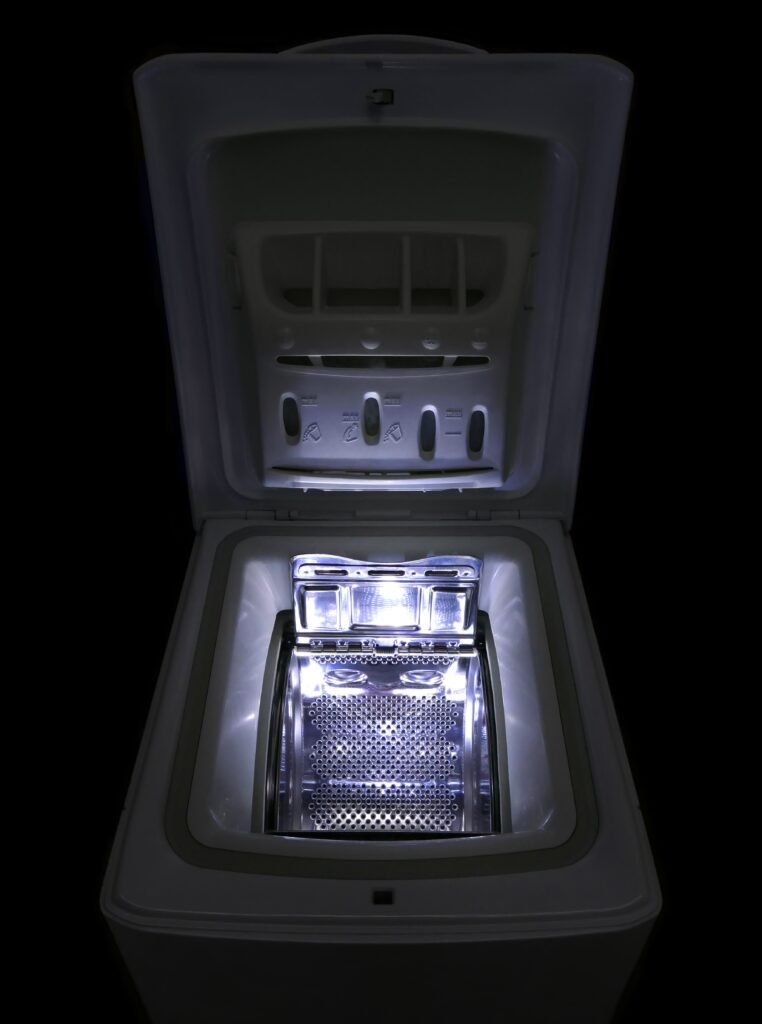
Every wash ends the same way: dirty, soapy water has to leave the drum. Most of us only think about it when the machine stops mid-cycle with grey water standing inside. Knowing how a washing machine drains — when it happens, which parts do the work, and where the water goes — makes it easier to tell a normal drain from a developing fault.
Safety First
Unplug the washer before pulling it out, disconnecting a hose, or opening the pump filter, and keep towels and a shallow tray ready — trapped water will spill out. If water is near electrics, you smell burning, or the machine trips the power, stop and call a qualified repairer.
When Does a Washing Machine Drain?
Draining is not a single event at the end of a wash. In a standard programme it happens at least twice. The first drain follows the main wash: the machine pumps out the dirty water, then refills with clean water for the rinse. After the final rinse comes the last drain, just before the high-speed spin, emptying the tub completely so the spin can fling remaining moisture out of the fabric.
The Parts That Do the Draining
The sump and drain filter. Water collects in the sump, the lowest point of the outer tub, then passes through a small debris filter — usually behind a flap at the front bottom — which catches coins, buttons, hair, and lint.
The drain pump. The heart of the system: a small motor driving an impeller, a disc with angled vanes. When the control board signals it, the impeller spins fast, forcing water out — strong enough to push it several feet uphill into a standpipe.
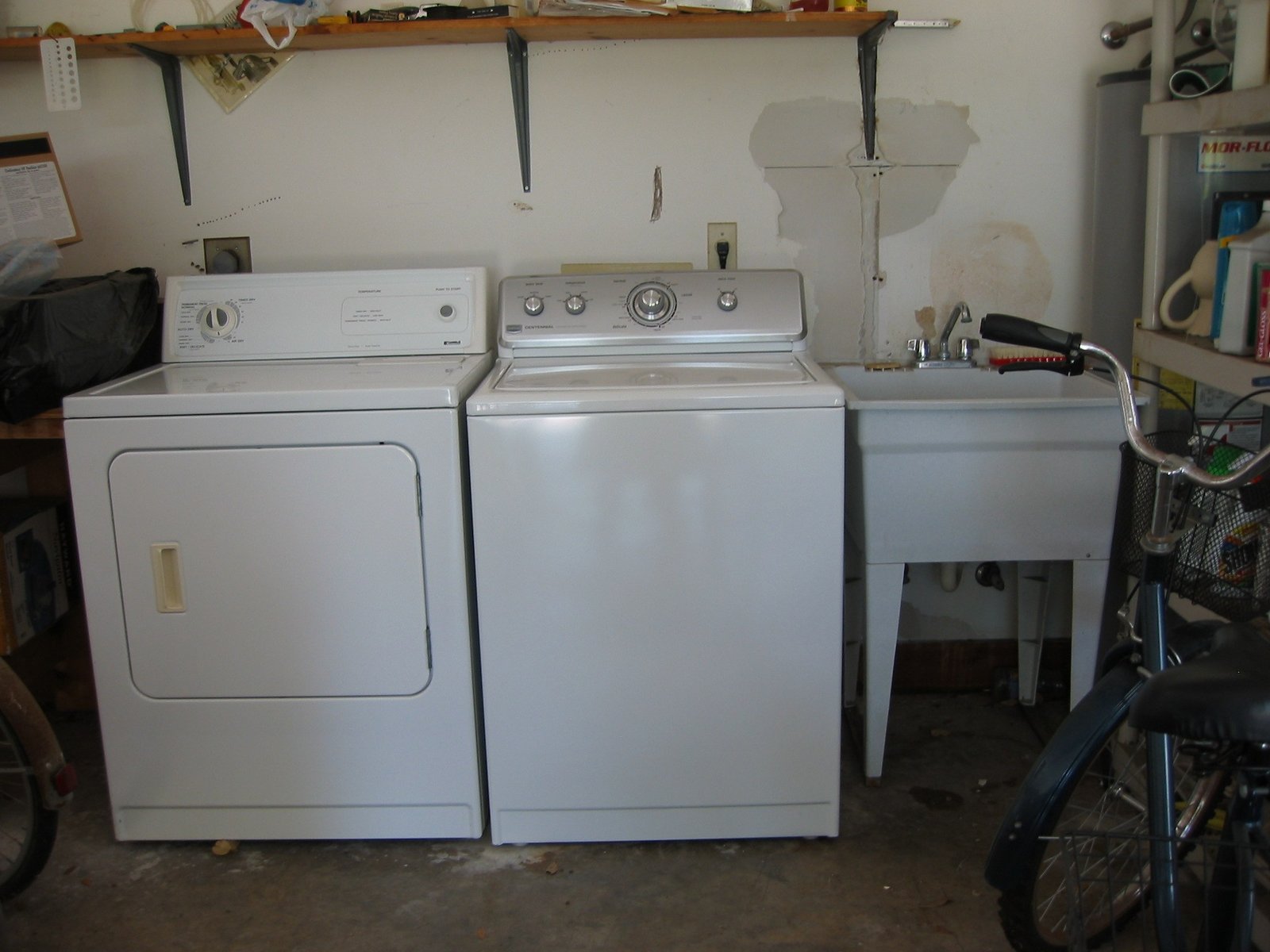
The drain hose. A flexible corrugated tube that carries water from the pump out of the cabinet, usually hooked over the top of a standpipe or clipped over a utility sink.
The standpipe and P-trap. The standpipe is a vertical pipe, typically 1.5 to 2 inches wide, built into the wall or a laundry box. Below it sits the P-trap, a U-shaped bend holding a little water — a seal that stops sewer gases entering the laundry room.
The control board and water-level sensor. The control board — or a mechanical timer on older machines — decides when the pump runs. A pressure switch linked to the tub by a thin air tube tells the board when the drum is empty.
Pump Drain vs. Gravity Drain
Modern automatic washers are pump-drained: the pump actively pushes water out, so the machine can empty itself even when the drain point is higher than the drum. A few older or portable machines are gravity-drained instead, with the hose laid low so water flows out downhill.
Either way, hose height matters. Guidance generally puts the top of the drain hose 60 to 100 cm (roughly 24 to 40 inches) above the floor, with no more than about 15 cm (6 inches) of hose inside the standpipe. Too low, and gravity siphons water out continuously, so the machine keeps filling and draining and never finishes. The hose must also sit loosely in the standpipe, so water flows only when the pump runs.
How to Tell If Your Machine Is Draining Properly
During the drain part of the cycle you should hear the pump hum for a minute or two. When the cycle ends, the drum should be empty, the clothes damp but not dripping, and the machine should move smoothly from drain into spin without pausing or flashing an error code.
Warning signs are just as clear: water left in the drum, clothes coming out soaking wet, a drain that takes much longer than usual, gurgling from the standpipe, a bad smell, or an error code pointing at the drain.
Common Drain Problems and Safe Fixes
Clogged drain filter. The most common cause, and the easiest fix. With the machine unplugged and towels ready, open the filter flap, drain trapped water slowly, and remove lint, coins, and hair.
Kinked, squashed, or blocked drain hose. Pull the machine out with the power off and check the hose along its length for kinks, crushing, or an end that has slipped out of the standpipe.
Blocked standpipe or household drain. If the machine drains fine into a bucket but backs up into the standpipe, the blockage is in the plumbing, not the machine. Try a plunger on the standpipe opening; leave anything beyond that to a plumber.
Too much detergent. Excess suds can fool the water-level sensor and slow or stop a drain.
A faulty pump or lid/door switch. If you hear no pump hum during the drain stage, or the machine will not drain or spin until you press the lid down, the pump motor, wiring, or lid switch may have failed. These are repairer jobs — do not bypass a safety switch yourself.
For step-by-step troubleshooting, see our guide to why a washing machine won’t drain. See also our washing machine not working guide.
When to Call a Technician
Call a qualified repairer if the pump grinds or buzzes but moves no water, if the same drain fault returns after you have cleaned the filter and checked the hose, or if water leaks from inside the cabinet. Call a plumber — not an appliance repairer — if the standpipe overflows or the household drain itself is blocked.
Keeping the Drain Working Well
Most drain trouble is preventable. Clean the pump filter every two to three months, check pockets before loading, use the right amount of detergent, and check the drain hose once a year. Replace a hose that is bulging or more than five years old.
Frequently Asked Questions
How does a washing machine drain water out?
The control board switches on the drain pump after the wash and after each rinse, and the impeller pushes water from the sump through the filter and hose to the standpipe.
How long should a washing machine take to drain?
Roughly one to three minutes. If it takes much longer or leaves water behind, check the pump filter and drain hose first.
Why is there still water in my washing machine after the cycle?
Usually a clogged pump filter, a kinked or blocked drain hose, too much detergent, or a faulty pump. Clean the filter and check the hose first.
Does a washing machine drain by gravity or by a pump?
Most modern washers drain by pump, pushing water uphill into a standpipe. A few older or portable machines drain by gravity, with the hose laid low.
Where does washing machine drain water go?
Through the drain hose into a standpipe or utility sink, then through the P-trap into the home’s drain plumbing, and on to the sewer or septic tank.
Pingback: Where Does Water from Washing Machine Go?