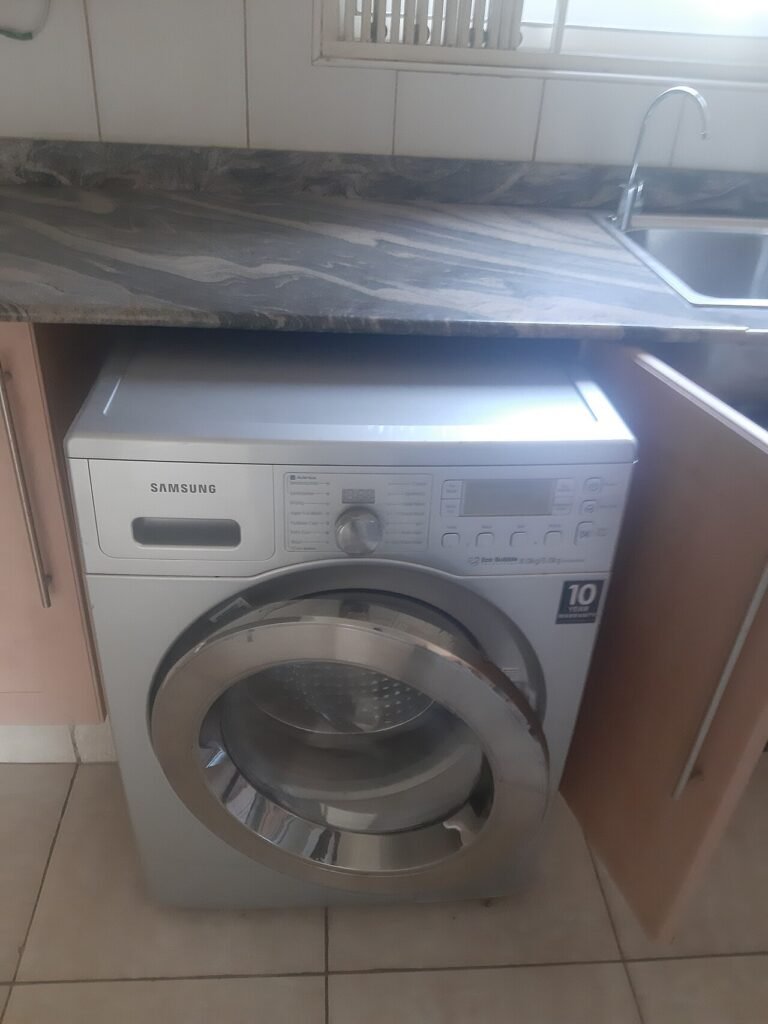
Every wash cycle moves tens of litres of water in and out of your machine, yet most of us never think about where it ends up. So, where does water from washing machine go? In short: the drain pump pushes it out of the drum, up a drain hose and into a standpipe or laundry sink, and from there it flows through your home’s drains to a municipal sewer or a private septic system. Knowing that route helps you spot problems early — a hose at the wrong height or a blocked standpipe can flood a laundry room fast.
The Short Answer
Where does water from washing machine go? After the wash and rinse, the drain pump pushes the dirty water — now called grey water — out through a flexible drain hose into a vertical pipe called a standpipe (or, in some homes, over the edge of a laundry sink). Gravity then carries it down through a P-trap into your home’s drain system and out through the main drain — to a public sewer and treatment plant, or a septic tank on your property.
Where Does Water from Washing Machine Go? Step by Step
- Filling. Inlet valves open and fresh water flows in through the hoses at the back, mixing with detergent. Front-loaders use far less water than top-loaders, tumbling clothes through a shallow pool instead of submerging them.
- Washing and rinsing. The drum turns and the water picks up dirt, detergent, lint and oils. The machine empties after the wash and after each rinse, so a cycle drains two or three times — roughly 15 to 45 gallons (55 to 170 litres) per load.
- The drain pump. At the bottom of the machine, an electric pump draws water from the sump — the lowest point of the outer tub — and forces it out under pressure, strong enough to lift water about 8 feet (2.4 metres). First the water passes a small filter, or coin trap, which catches coins and lint.
- The drain hose. The corrugated grey hose at the back carries the water up and out in a high loop above the drum’s maximum water level before dropping into the standpipe. If the hose hung low, water would siphon out as fast as the machine filled.
- The standpipe and P-trap. The hose hooks over the top of the standpipe — a vertical drainpipe usually 1.5 to 2 inches wide — without being sealed in, leaving a small air gap. Below sits a P-trap, a U-shaped bend holding a plug of water that stops sewer gases such as methane from drifting into your laundry room, while a vent pipe through the roof lets air in so water drains smoothly.
- The sewer or septic system. Past the trap, the grey water joins the rest of your home’s wastewater and leaves through the main drain — into the public sewer and on to a treatment plant, or, without a sewer connection, into a septic tank, where solids settle and the remaining liquid disperses into a drain field to be filtered by the soil.
Front-Loader vs Top-Loader: Does the Water Go to the Same Place?
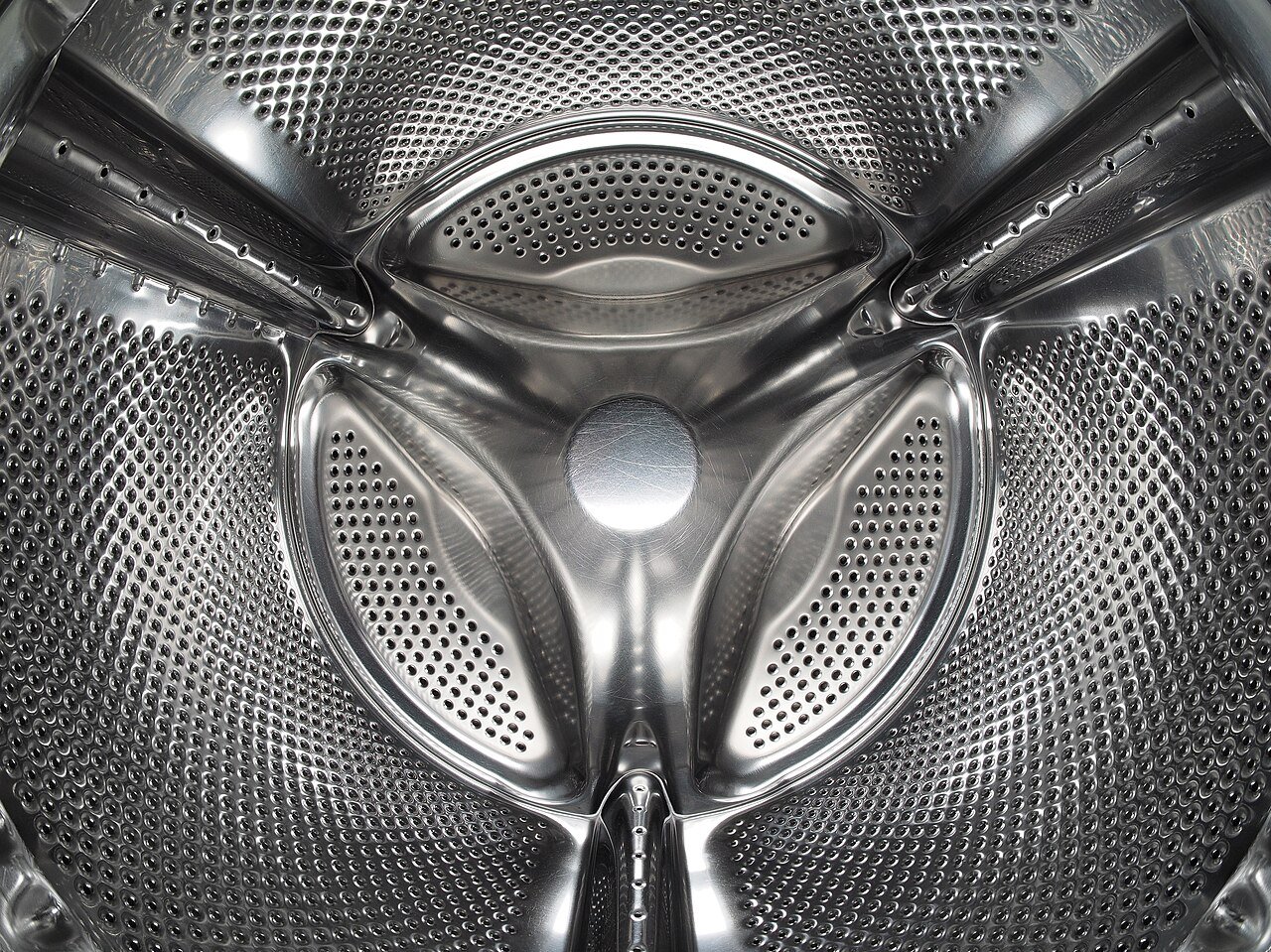
Yes — the destination is identical; only the route inside differs. In a front-loader the drum sits horizontally, so water collects at the bottom of the outer tub and is lifted out by the pump, usually behind a small panel at the bottom front. In a top-loader the drum sits vertically, and water drains down by gravity into the sump before the pump pushes it out. Front-loaders also use much less water — often half as much. If your machine ever stops draining, the fix depends on the type, which is why our guide to how a washing machine drains covers both.
How High Should the Drain Hose Be?
Too low, and the machine siphons water out during the fill so the cycle never completes. Too high, and the pump cannot lift the water. US plumbing codes generally require the standpipe to extend 18 to 42 inches above the trap weir — the water level inside the P-trap — with the Uniform Plumbing Code narrowing that to 18 to 30 inches. Since the trap usually sits 6 to 18 inches above the floor, the standpipe top typically ends up 30 to 48 inches above the floor, and the pump’s maximum lift is about 96 inches (8 feet). The hose should only dip 4 to 8 inches into the standpipe — push it further and you risk losing the air gap and creating a siphon. Check your machine’s manual and local code, as exact numbers vary.
Where Does the Water End Up? Sewer vs Septic
For most homes the answer is the municipal sewer and then a treatment plant, where the water is screened, settled and biologically treated. With a septic system, the water goes into the septic tank and then the drain field; septic owners should avoid harsh chemicals and spread loads across the week, as a sudden surge can disturb the tank’s balance. Either way, washing machine water is grey water — wastewater from laundry, sinks and showers, as distinct from toilet waste — but in most homes it is not separated or reused.
What If the Water Comes Back Up?
If water bubbles up out of the standpipe, appears in a nearby sink, or pools on the floor during the drain cycle, something has failed — usually a partial blockage, a standpipe too narrow for the pump’s flow (modern machines can discharge up to about 17 gallons per minute), or a hose pushed too far down the pipe. Start with our guide to how a washing machine drains and our post on why a washing machine won’t drain, and call a plumber if a drain keeps backing up. Sudden flow changes elsewhere during a wash can also point to a supply-side issue, covered in our post on water pressure dropping when the washing machine is running.
Frequently Asked Questions
Where does water from washing machine go after the drain cycle?
It is pumped through the drain hose into a standpipe or laundry sink, flows down through a P-trap into your home’s drain system, and ends up in the municipal sewer or a private septic system.
Is washing machine water grey water?
Yes — the same category as water from showers and bathroom sinks. Unlike toilet waste it contains no sewage, but it carries detergent, dirt and lint, so it is not clean water.
Does washing machine water go to the sewer or the septic tank?
It goes wherever the rest of your home’s wastewater goes: the public sewer if you are connected, or the septic tank if you are not.
Can washing machine water be reused?
Only with a proper grey-water system that filters and diverts it for garden irrigation or toilet flushing — a standard installation does not reuse it. Never divert the drain hose to the garden without checking local regulations.
Why does my washing machine drain hose need to be high up?
It must rise above the drum’s maximum water level to prevent siphoning, which would drain the machine as fast as it fills. The standpipe opening is typically 30 to 48 inches above the floor, and the hose should only extend 4 to 8 inches into it.